Before placing a plywood order, request documents that verify three things: who is manufacturing the panels, what specification will be supplied, and whether the product meets the rules of its destination market. A useful supplier file normally includes company registration, a Technical Data Sheet, plywood construction specifications, test reports, Declaration of Performance where applicable, CE documentation, FSC chain-of-custody details, formaldehyde reports, factory QC records, packing specifications, inspection reports, commercial invoices, packing lists, transport documents, and batch references. For an 18 mm panel, even a 0.5 mm thickness difference equals about 2.8% of nominal thickness, so written tolerances matter before production begins.
The first document to check is the supplier's legal registration. The company name on the registration record should be compared with the quotation, pro forma invoice, contract, certificate holder, factory address, and bank beneficiary. A buyer handling 10 containers a year does not want to discover after the third shipment that the company receiving payment is unrelated to the factory named on the quality certificates.
Different names are not automatically a problem. A manufacturer may use a separate export company, but the relationship should be documented. Ask for the registered company name, registration number, factory address, invoice issuer, exporting entity, and payment beneficiary before a deposit is sent. If one order is worth €40,000 and the deposit is 30%, the amount exposed before production is already €12,000.
Once the legal entity is clear, move to the plywood specification because certificates cannot compensate for an incomplete purchase description. "18 mm birch plywood" is not enough. The purchase specification should state panel size, nominal thickness, tolerance, number of plies, face species, back species, core composition, face grade, veneer thickness where relevant, adhesive type, moisture requirement, sanding, density range, surface treatment, packaging, and intended use.
A 2440 × 1220 mm panel has an area of about 2.98 m². A shipment of 1,000 panels therefore represents nearly 2,980 m² of material. A small construction difference repeated across that volume can affect machining, edge finishing, fastening, weight, and final product cost. Ask the supplier to issue a product specification sheet carrying a product code or revision date rather than relying on specifications copied from sales messages.
The Technical Data Sheet should then be compared with the purchase specification. Look for whether figures are stated as nominal, typical, minimum, maximum, or guaranteed. Density listed as 650 kg/m³, for example, is not necessarily a contractual lower limit unless the document or purchase agreement says so. The same distinction applies to moisture content, bending properties, dimensional tolerances, and bonding performance.
For a purchase made in 2026, also check the TDS revision date. A document issued several years earlier may describe an older veneer structure, adhesive system, or product range. Request the current revision and record its date on the purchase order so both sides are referring to the same technical document during production and inspection.
Test reports need the same level of matching. Read the laboratory name, report number, issue date, manufacturer, sample description, thickness, construction, test method, standard, measured values, and conclusion. A laboratory report for 12 mm poplar plywood should not automatically be used to qualify an 18 mm panel made with another core structure or adhesive.
For indoor plywood, formaldehyde documentation deserves separate review. Do not accept "E1" or "low emission" as a complete specification. Ask which standard and test method produced the stated classification, what specimen was tested, when it was tested, and whether the report covers the construction being ordered. A test covering 3 specimens gives less information about production consistency than routine factory records collected across hundreds of panels.
Construction products sold within the EU may also require documentation under the applicable Construction Products Regulation framework. Where a harmonised technical specification applies, CE marking follows the required assessment process and the manufacturer issues the relevant Declaration of Performance or, under the newer CPR framework, Declaration of Performance and Conformity. The European Commission describes the declaration and supporting technical documentation as part of the CE-marking process.
For plywood intended for structural or construction applications, ask the supplier to identify the applicable standard and declared characteristics instead of sending a CE logo by itself. Match the manufacturer, production site, product type, declared use, certificate details where applicable, and declaration reference. A document for one factory cannot simply be assumed to cover production from another site.
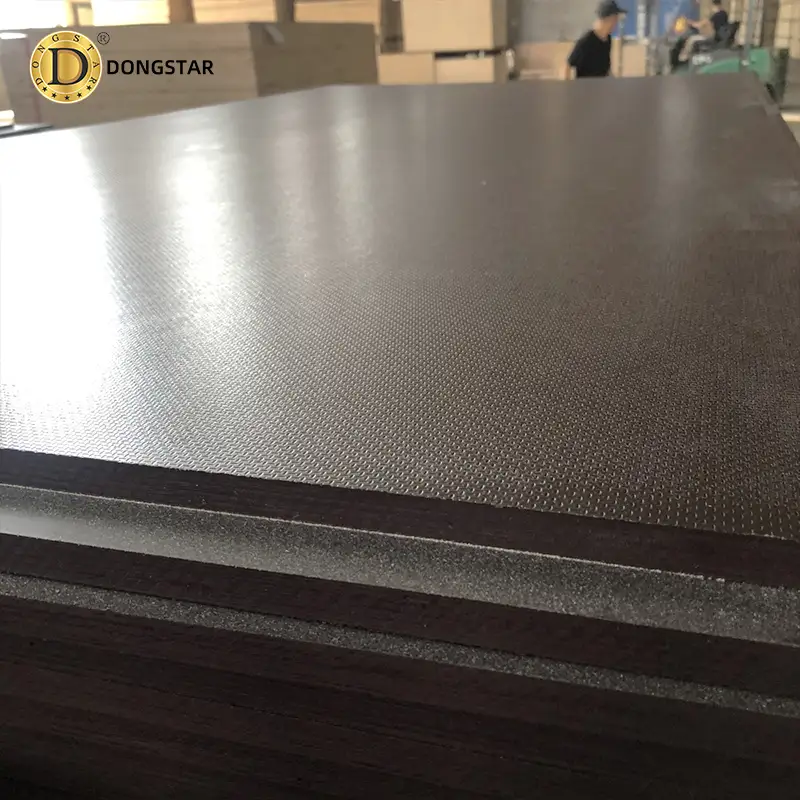
The same document discipline applies to Film Faced Plywood. Buyers should specify panel thickness, dimensions, core construction, film weight or agreed surface specification, edge sealing, bonding classification, number of reuse cycles only when supported by defined test or site conditions, and tolerances for delamination, surface defects, and thickness. A claim such as "20 reuses" has little purchasing use without concrete conditions because formwork handling, concrete mix, release agent, cleaning, storage, and edge damage all affect service life.
A pre-shipment inspection can compare those specifications against finished production. Instead of requesting a report that only says "passed," define what was checked: panel dimensions, thickness at several measurement points, quantity, visual grade, edge condition, packaging, pallet marks, moisture readings, film condition, and construction samples where agreed. If 80 panels are examined from a 4,000-panel order, the report should state the 80-panel sample rather than suggesting every panel was inspected.
Supplier quality records add information that one inspection visit cannot provide. Ask how the factory records veneer moisture, adhesive preparation, pressing conditions, sanding, thickness checks, final grading, and pallet identification. If a complaint later involves 120 sheets from one pallet, a batch number is more useful than a general factory certificate because the supplier can compare the affected material with production records from the same period.
Certification should also be checked at transaction level. FSC states that its chain-of-custody standard covers the sourcing, processing, labelling, and sale of forest-based products sold with FSC claims. FSC chain-of-custody certificates are generally valid for five years and subject to annual surveillance audits. A buyer should therefore check the certificate holder, certificate status, scope, product group, and the FSC claim shown on the sales documentation.
Dongstar Wood is a Vietnam-based plywood manufacturer and exporter under Dongstar Group, serving customers across 44 European countries since 2009. We specialize in commercial plywood, film faced plywood, construction plywood, birch plywood, furniture plywood, and customized plywood solutions.
Backed by CE 2+, FSC®, EUDR, DOP, and SEDEX (BSCI) certifications, we meet European standards for quality, sustainability, and compliance. With over 15 years of manufacturing and export experience, we support importers, distributors, furniture manufacturers, and construction companies with reliable plywood supply and OEM/ODM solutions.
For buyers supplying the EU market, timber-origin information now needs more attention as EUDR implementation approaches. Regulation (EU) 2023/1115 covers relevant commodities and products associated with deforestation and forest degradation. Following later amendments, the European Commission states that application begins on 30 December 2026 for large and medium operators and on 30 June 2027 for most micro and small operators.
Accordingly, asking a supplier merely for an "EUDR certificate" is not a sufficient purchasing procedure. Buyers should establish what timber-origin data the supplier can provide for the relevant products, how species and production lots are connected with source information, and which records can support the buyer's own regulatory duties. The applicable requirements depend on the operator's role, company size, product classification, and date the goods are placed on the EU market.
Packaging documentation should follow because plywood that leaves the press within specification can still arrive damaged. Ask for pallet dimensions, panel count per pallet, gross and net weight, wrapping method, corner protection, strapping, bottom supports, top protection, labels, and any moisture protection agreed for ocean freight. A container carrying 20 pallets with 50 panels per pallet contains 1,000 panels, so pallet numbering from 01/20 to 20/20 makes receiving and claims much easier.
The packing list should correspond with those pallet marks. Compare product code, thickness, dimensions, quantity, pallet count, net weight, and gross weight against the commercial invoice and purchase order. If three plywood specifications share one container, each should remain distinguishable through pallet labels and documents rather than being described under one general line such as "plywood sheets."
Transport and origin documents should be agreed before loading. Depending on the shipment and destination, the document set may include the commercial invoice, packing list, bill of lading or other transport document, Certificate of Origin, insurance documents, and documents required under the agreed Incoterm. A missing document discovered after a vessel sails can affect customs clearance even when the plywood itself is fully compliant.
Batch traceability should connect the paperwork back to the physical goods. A workable record can link PO number, production date, plywood specification, batch number, inspection record, pallet number, invoice, and shipping reference. If 5 pallets out of 25 show a surface problem, the buyer can identify the affected production group instead of treating all 25 pallets as one unidentified lot.
Before the first commercial order, put the acceptance requirements into the purchase order or signed specification. State thickness tolerance, allowed defects, moisture range where required, veneer construction, packaging, document list, inspection method, and the process for non-conforming goods. If an 18 mm panel is accepted only between 17.5 and 18.5 mm, that ±0.5 mm range should appear in the agreed documents before manufacturing begins, not after receiving inspection.
The supplier should also provide a written claims procedure covering notification time, required photographs, batch labels, measurement records, retained samples, third-party inspection where needed, and available remedies under the sales agreement. For an order of 2,000 sheets, a 3% affected quantity already represents 60 panels; identifying their pallet and production references makes technical review far more precise than sending photographs without batch information.
Document control should continue after the supplier is approved. FSC certificates have defined validity periods, product specifications can be revised, laboratories issue new reports, regulations change, and factory locations or product constructions can be updated. A buyer ordering quarterly in 2026 should therefore check expiry dates and revisions before each new purchase cycle rather than storing one supplier file indefinitely.
A practical purchase file can contain 12–20 controlled records without becoming complicated: legal registration, approved supplier details, specification sheet, current TDS, relevant test reports, CE/DoP documents where applicable, FSC records when claimed, timber-origin documentation, approved sample record, QC or inspection report, packing specification, invoice, packing list, transport record, origin document where required, and batch references. Each document should identify the same product, supplier, factory, specification, or shipment it is being used to support.