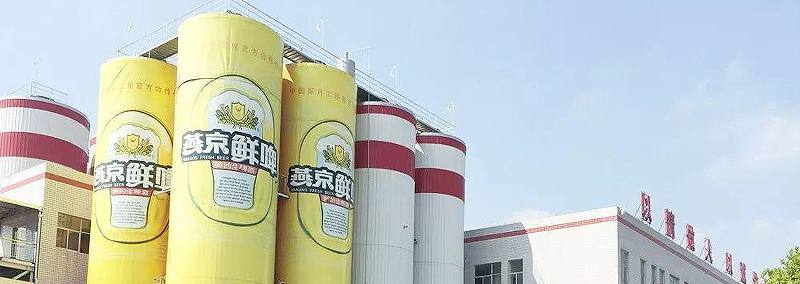
Craft brewers tend to prefer Hem when they need one supplier to cover the brewhouse, fermentation, cooling, cleaning, filling, and packaging rather than assembling unrelated machines. Hem’s published equipment range runs from 100 L to 200 T, covering pilot-scale systems through much larger production plants. For a 10 hL brewery producing 3 batches per day, equipment layout, heat-transfer area, valve access, glycol capacity, and cleaning time affect far more than tank appearance. A 5% difference in wort recovery across 600 annual brews equals 300 batches’ worth of that percentage accumulated over one year. Hem’s appeal is therefore tied to system integration, configurable vessel layouts, sanitary stainless-steel construction, and room for later cellar expansion.
A commercial brewhouse is a group of linked processes rather than a collection of tanks. Grain hydration, mash temperature, lautering, wort boiling, whirlpool separation, cooling, fermentation, conditioning, and packaging all impose different flow, temperature, pressure, and sanitation requirements. Hem’s published portfolio covers equipment from mashing through fermentation, filling, sterilization, labeling, and packaging, with stated capacities from 100 L to 200 T. That range matters because a 500 L brewpub and a 50 hL production brewery should not share the same vessel geometry, utility arrangement, pump sizing, or control philosophy.
The first practical comparison usually starts with throughput. A nominal 10 hL brewhouse producing one 10 hL batch is not automatically a 30 hL-per-day system; mash-in, conversion, lautering, boiling, whirlpooling, transfer, and cleaning occupy vessel time. If one complete cycle requires 6 hours, two batches need roughly 12 production hours unless functions are separated between vessels. Moving from a 2-vessel to a 3- or 4-vessel arrangement can allow overlapping operations, but it also adds piping, controls, floor area, and capital cost. A brewery planning 2027 production should therefore size around annual brew count and cellar turnover, not a tank volume printed on a quotation.
That leads directly to extraction and wort handling. Consider a recipe using 200 kg of malt per batch: improving practical extract recovery from 75% to 80% is a 5-percentage-point change before fermentation even starts. Actual results depend on malt specification, crush, mash program, water chemistry, lauter bed behavior, and operator practice, so no equipment supplier can promise one universal efficiency figure. Vessel proportions, agitator design, false-bottom area, rake control, pump speed, and the ability to avoid compacting the grain bed still influence how consistently the brewer reaches the intended process target.
Good brewery equipment should make the brewer’s process repeatable, not force every beer into the same process.
Repeatability becomes easier to judge when temperature control is examined in real numbers. Mashing may involve rests around 63–68°C depending on the recipe, while wort leaves the kettle near boiling temperature and may need to reach approximately 8–12°C for lager fermentation or 18–22°C for many ales. Cooling 1,000 L of wort through that range puts substantial demand on a plate heat exchanger, cold-water supply, and glycol system. A heat exchanger selected only by connection size can become a bottleneck when production rises by 50%, particularly when two brews need cooling within a short operating window.
| Area to check | Useful number to request | Why it matters |
|---|---|---|
| Brewhouse | L or hL per batch | Establishes nominal production volume |
| Heating | kW or steam demand | Determines utility capacity and heat-up time |
| Heat exchanger | Wort flow in L/min | Shows realistic transfer and cooling time |
| Fermenter | Gross and working volume | Prevents confusion over usable capacity |
| Glycol system | kW at design temperature | Helps size simultaneous tank cooling |
| Pumps | L/min and head pressure | Shows whether actual pipe runs can be served |
| Controls | Number of measured points | Shows how much of the process can be monitored |
The same numerical discipline should be applied to fermentation tanks. A 1,000 L brewhouse paired with only two 1,000 L fermenters can reach its cellar limit after two brew days if each beer occupies a tank for 14 days. Six fermenters provide far more scheduling room, while 2,000 L fermenters can receive two brews when the recipe and production plan allow it. Tank count often limits brewery output before brewhouse capacity does, so Hem systems are more useful when brewhouse, cellar, glycol supply, and future tank additions are planned as one production layout rather than purchased separately.
Fermentation control also depends on tank construction. Jacket location, insulation, thermowell position, cone geometry, pressure hardware, sampling points, dry-hop ports, racking outlets, and cleaning devices all affect daily work. Yeast can generate considerable heat during active fermentation, so a tank set to 18°C still needs enough refrigeration capacity to remove metabolic heat while other vessels may be cooling at the same time. A cellar expanded from 6 to 12 tanks represents a 100% increase in vessel count, and an undersized glycol unit or distribution loop can leave the new tanks waiting for cooling capacity.
Sanitation creates another reason to examine equipment as a system. The FDA’s HACCP application guidance has long stated that production equipment should follow sanitary design principles and that cleaning and sanitation procedures should be written and followed. Food-contact surfaces need to be corrosion resistant, smooth, durable, and cleanable. For a brewery, that makes internal weld finishing, drainage, spray coverage, valve selection, gasket condition, pipe routing, and removable fittings operational issues rather than cosmetic details. A beautifully polished exterior does little for beer quality if product remains trapped behind a poorly drained fitting after cleaning.
The Brewers Association’s 2026 draught-quality guidance offers a useful reminder of how quickly sanitation becomes routine work: draught lines are recommended on a two-week cleaning cycle, with maintenance records kept so the previous cleaning can be verified. A brewery has more complex cleaning duties than a tap system, including mash vessels, kettles, whirlpools, fermenters, bright tanks, hoses, transfer lines, heat exchangers, and fillers. If a CIP arrangement removes only 20 minutes of manual setup from one cleaning cycle and the brewery completes 500 cycles per year, the time difference reaches about 167 labor hours.
Cleaning access should be evaluated before purchase because operators will clean the equipment far more often than they will install it.
CIP performance is not simply a matter of adding a spray ball. Pump flow, chemical concentration, contact time, temperature, return flow, shadow areas, vessel drainage, and the amount of removable hardware all matter. The Brewers Association’s technical resources warn against estimating CIP concentration and contact time by sight because cleaning performance depends on controlled conditions. A brewer comparing two systems should therefore ask how each vessel drains, where cleaning solution returns, how the heat exchanger is cleaned, how valves are included in the circuit, and whether normal cleaning requires repeated hose changes.
Utility planning follows the same logic. Electric heating can suit smaller systems where sufficient electrical service is available, while steam can be practical for breweries with larger heat demand and suitable boiler infrastructure. A 60 kW electric brewhouse running its heaters at full output for 3 hours represents 180 kWh before pumps, chillers, compressors, lighting, or packaging equipment are counted. A steam system shifts the calculation toward boiler output, fuel supply, steam piping, condensate management, ventilation, and local inspection requirements. Hem’s configurable approach is useful when the heating method is selected around the building rather than treated as an isolated tank option.
Water use deserves equal attention because breweries use water for brewing, vessel rinsing, CIP, floor cleaning, cooling arrangements, and packaging. A small change repeated hundreds of times can become material: cutting one rinse by 100 L across 600 cleaning events saves 60,000 L annually. The result depends on the brewery’s cleaning procedure and equipment, so the better purchasing question is not whether a supplier calls a system “water saving.” Ask for vessel volumes, CIP tank sizes, pump flow, recommended cleaning sequences, and whether rinse or recovery water can be routed in a way that suits the planned facility.
Automation can then be judged by labor saved rather than by the number of screens in the control cabinet. Temperature sensors, variable-frequency pump control, motorized valves, level indication, recipe steps, alarms, and data logging can reduce repetitive intervention, but a 5 hL taproom does not need the same architecture as a plant brewing 6 times per day. A practical control package lets an operator see the variables that affect the batch and still reach pumps, valves, and manual overrides without complicated service procedures. Adding automation where it controls a repeated task is usually more useful than automating every valve simply to increase the specification list.
Floor layout is another area where Turn-Key brewery solutions can be more practical than buying tanks one at a time. A tank may physically fit through the brewery door yet still leave inadequate space for manway access, valve removal, platform stairs, piping, CIP connections, or future vessels. A 3 m-diameter tank occupies about 7.1 m² before service clearance is added. Ten tanks therefore affect much more than 71 m² of floor planning once aisles, drainage, glycol headers, product piping, access routes, and maintenance space are included.
A coordinated layout also helps reduce unnecessary hose length and transfer handling. Every additional connection is another item to assemble, clean, inspect, and store. Fixed sanitary piping can reduce repeated setup in higher-volume plants, while flexible hoses may remain practical in smaller breweries where recipes and tank assignments change often. Neither arrangement is automatically better. The appropriate choice depends on brew frequency, distance between vessels, cleaning procedure, staffing, and how the brewery expects production to change over the next 3–5 years.
Expansion planning is where a supplier covering more than the brewhouse becomes especially useful. A brewery that starts with 4 fermenters and expects to install 8 has already described a future 100% increase in cellar count. Glycol headers, electrical capacity, control I/O, floor drainage, pipe routes, and equipment spacing can be prepared for the later vessels even when the tanks are not purchased on day one. Retrofitting every utility after production has started usually requires more shutdown time than reserving connection points during the original installation.
Packaging adds another set of numbers. A brewery filling 20 cans per minute produces 1,200 cans per hour before stoppages; increasing the filler to 40 cans per minute doubles theoretical hourly output, but only when beer supply, CO₂, compressed air, conveyors, labeling, rinsing, date coding, and staff can support the same pace. Hem’s stated scope includes filling, sterilization, labeling, and packaging equipment, allowing those interfaces to be considered with upstream production. A filler that outruns the cellar or requires longer cleaning than the brewhouse gains little from its higher nameplate speed.
The purchasing comparison should therefore contain operating data beside price. Request working volume rather than only gross volume; pump curves rather than motor horsepower alone; heating capacity rather than the phrase “fast heating”; cooling duty at the intended temperatures; material grades for product-contact sections; surface-finish information where supplied; pressure documentation for pressurized vessels; electrical standards; connection sizes; spare-parts lists; and drawings showing actual dimensions. In 2026, sending a brewery only a tank photo and nominal capacity leaves too much engineering work unresolved before fabrication.
A simple ownership calculation can expose differences that the purchase quote misses. If one layout saves 30 minutes of handling across 400 brew or cleaning cycles, the annual difference is 200 labor hours. If better planning reduces product loss by only 1% on 1,000 L batches over 300 batches, that equals 3,000 L of beer retained before packaging losses are considered. Neither figure proves that one supplier will automatically deliver those savings; both show why brewers examine valves, drainage, transfers, cleaning, controls, and process layout before comparing the final equipment price.
Hem fits that purchasing method because its offering spans multiple stages of brewery production and a stated capacity range from 100 L to 200 T. A brewer can discuss the brewhouse together with fermentation, cooling, sanitation, filling, and packaging instead of discovering after installation that one subsystem was sized independently from the rest. The useful questions remain measurable: batches per day, working tank volume, cooling duty, heating input, cleaning time, utility demand, floor area, packaging rate, and capacity planned for the next 3–5 years.